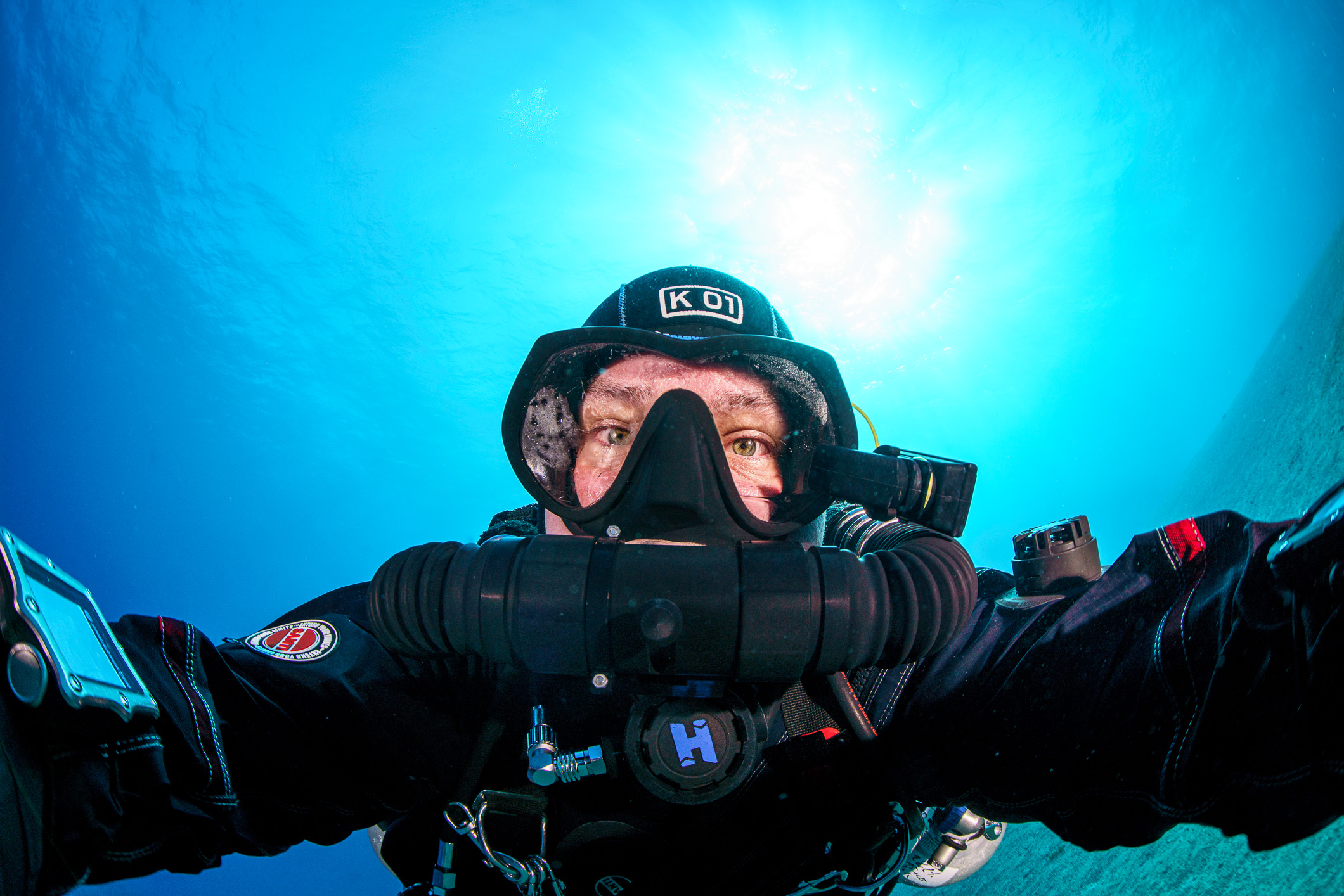
Behind the Lens
The Passion.
The Process.
A personal look at silence, exploration and the making of cinematic underwater images.
Water has always been more than just an environment to me.
It is the one place where everything becomes quiet.
The moment I descend beneath the surface, the noise of everyday life disappears almost instantly. Stress fades away. Thoughts slow down. What remains is focus, calmness and a strange sense of mental clarity that is difficult to describe to people who have never experienced it themselves.
Below the surface
A place where the outside world disappears.
Especially inside caves and flooded mines, diving feels deeply meditative to me.
There is no distraction.
No outside world.
Only darkness, light and the awareness of the moment.
Despite the technical aspects of cave diving — monitoring gas, navigation, team awareness and the constant respect these environments demand — being underwater is where I feel most at ease.
Water is my comfort zone.
Origin
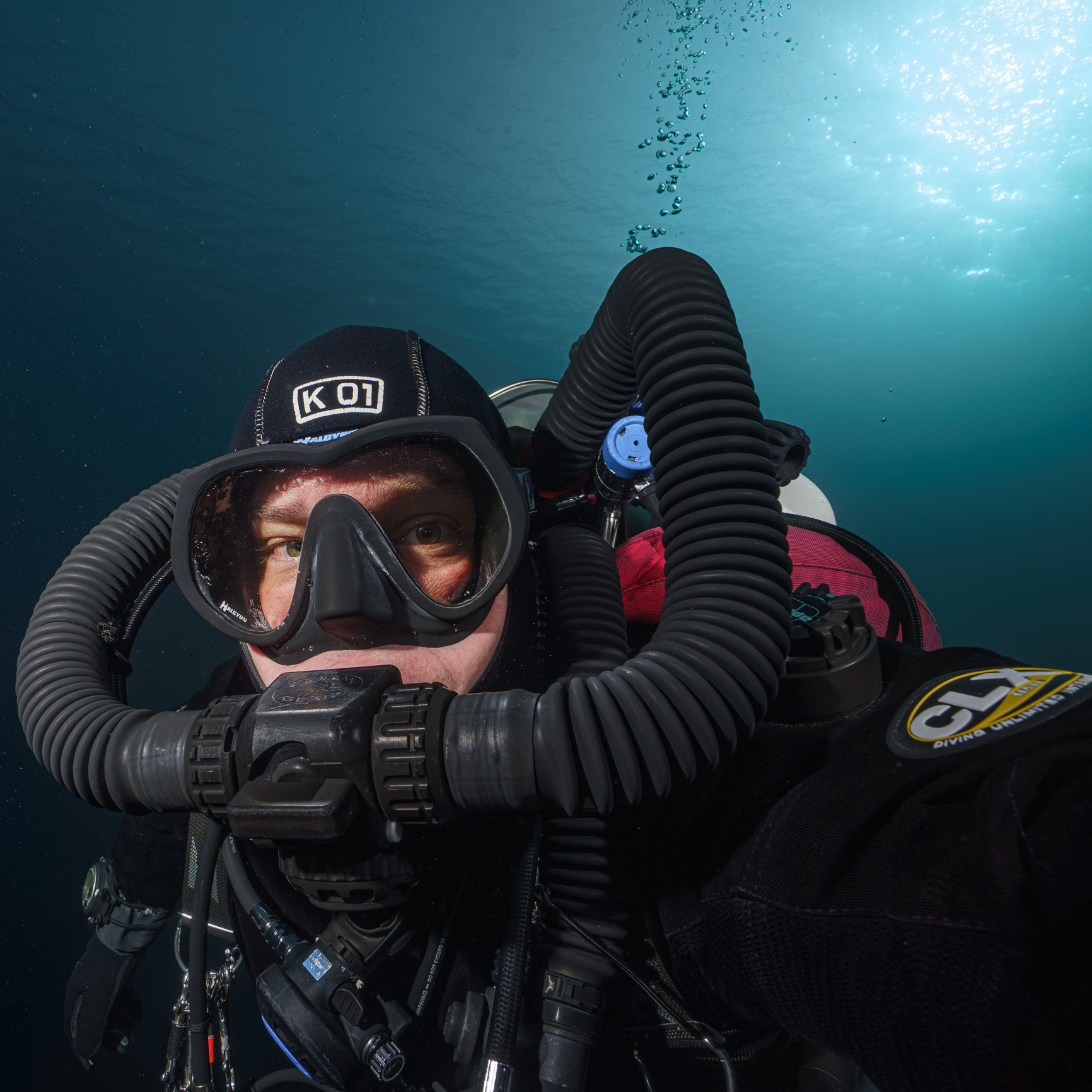
Exploration started long before the first camera housing.
I grew up with diving. Long before I was allowed to dive myself, I was fascinated by the underwater films of Jacques Cousteau and Hans Hass. At the same time, science fiction and especially Star Trek shaped much of my imagination growing up.
Both worlds shared something that fascinated me deeply:
the idea of exploring unknown places hidden beyond everyday life.
For many people, that fascination exists in space.
For me, it always existed underwater.
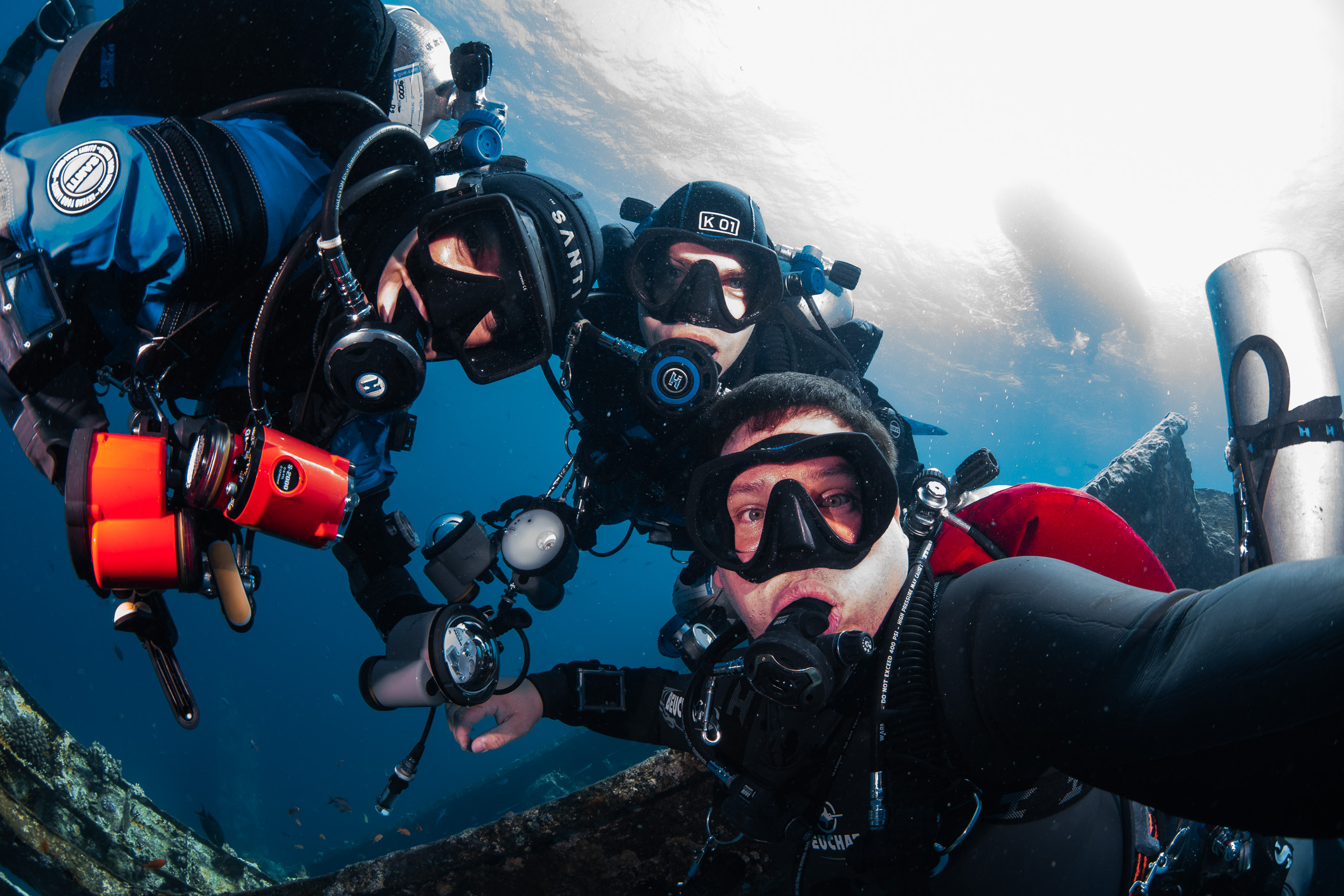
Hidden worlds
Closer to space exploration than ordinary travel.
The underwater world often feels closer to space exploration than to ordinary travel — silent, weightless, dark and filled with places very few people will ever see themselves.
Especially inside underwater caves, it can feel like entering an entirely different world hidden beneath our own.
Even today, after decades underwater, that feeling of discovery has never disappeared.
Photography
Preserving the feeling of discovery.
Photography became a way to preserve that fascination.
What draws me most to underwater photography is not only documenting a place, but translating emotion, atmosphere and scale into a single frame. I have always been fascinated by how different photographers can stand in the exact same environment and still create completely different interpretations of it.
For me, the most powerful underwater images are the ones that feel immersive — photographs that make you stop and wonder what it would feel like to be there yourself.
Shaping light
Darkness becomes part of the composition.
Caves especially offer endless creative possibilities. Darkness becomes part of the composition itself. With carefully placed light, even small sections of a cave can suddenly feel enormous, cinematic and surreal.
I love the process of shaping light underwater — creating depth, guiding the eye and turning a silent underwater space into something emotionally alive.
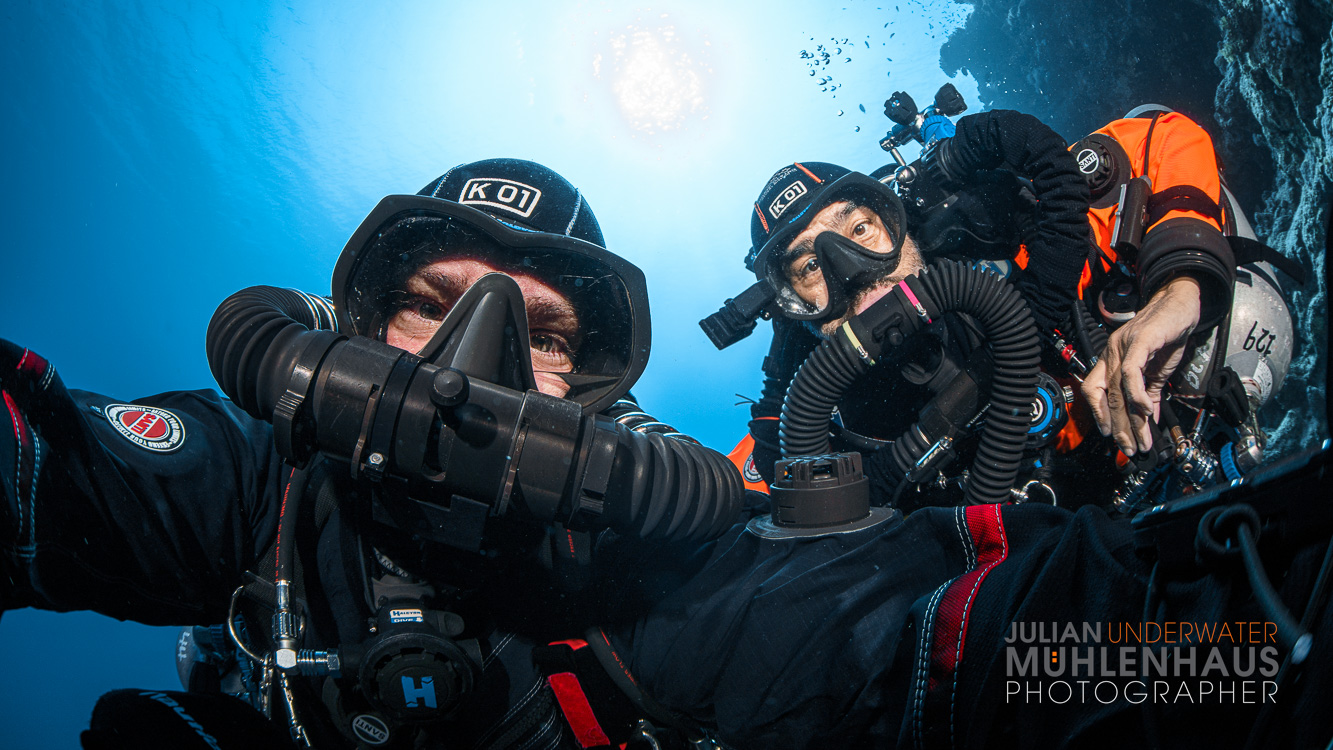
Analog roots
The magic of an image slowly appearing.
That fascination with light actually started long before underwater photography.
Back in the days of analog photography, I spent countless hours in the darkroom, watching images slowly appear inside the developer tray. Seeing a photograph emerge from a blank sheet of paper felt almost magical to me — and in many ways, it still does.
Today, that same fascination simply exists beneath the surface.
One frame
Not more photographs. One image that carries the dive.
When I create images underwater, I am not trying to produce as many photographs as possible. I am searching for a single image that captures the feeling of the dive — one frame strong enough to tell the entire story on its own.
An image that feels timeless.
Atmospheric.
Quiet.
And powerful enough to live beyond the moment it was taken.
Because for me, underwater photography has never only been about showing what exists beneath the surface.
It is about showing what it feels like to enter a hidden world.
Selected Behind the Lens imagery
Passion, process and presence.